Interview with Hans Gustafson, Ph.D. and John Merkle, Ph.D.


Featured Organizational Partner: Jay Phillips Center for Interreligious Studies at the University of St. Thomas and Jay Phillips Center for Interfaith Learning at Saint John’s University
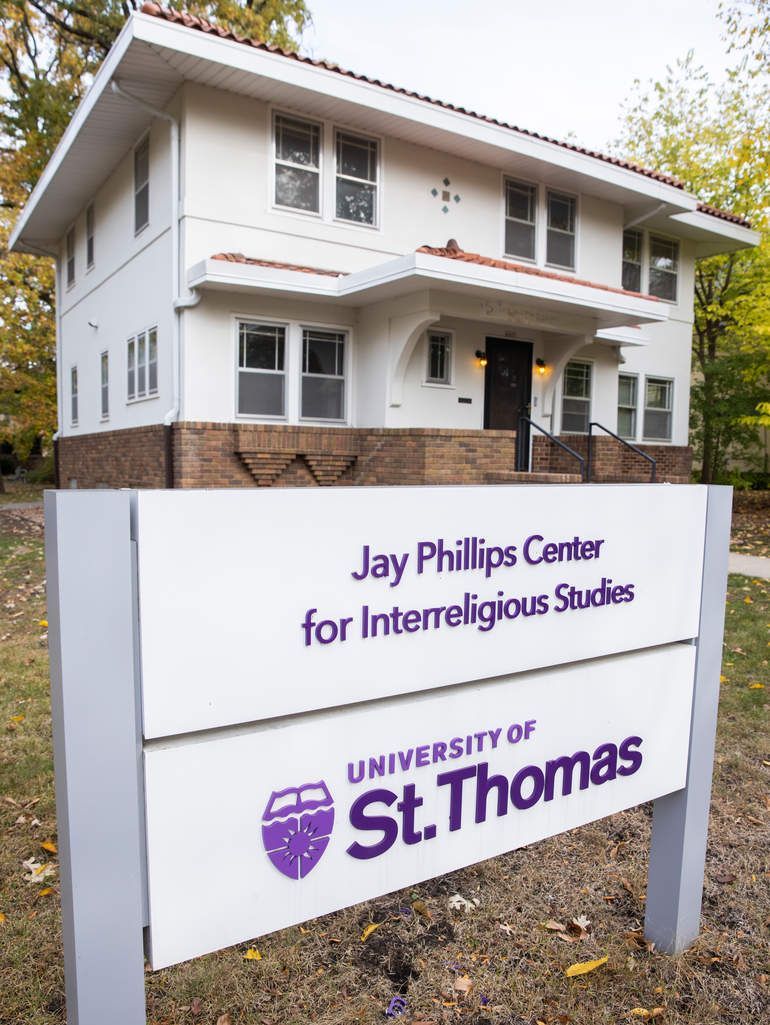
We were delighted to have a conversation with Dr. John Merkle and Dr. Hans Gustafson about the compelling work they do at each of the Jay Phillips Centers. The activities of the two centers show that there are opportunities for interfaith dialogue throughout the state, whether you are in the Twin Cities or Greater Minnesota. Their work also shows that interfaith connections are not only necessary, they can be joyful and transcendent.


The Jay Phillips Center for Interfaith Learning at Saint John’s University has its roots in the university’s Jay Phillips Chair in Jewish Studies, established in 1969 and named after the Jewish philanthropist who endowed it. The Jay Phillips Center for Interreligious Studies at the University of St. Thomas has its roots in the university's Center for Jewish-Christian Learning, which was established in 1985. In 1996, the centers became a joint enterprise. In 2009, the center's mission was expanded to interfaith learning in general and it was given its new name to reflect that.

In 2017, the center was divided into two partner centers. Dr. Merkle said, “Given the different constituencies and the very different situations of the two branches, I thought it was time to move back to two separate entities that collaborate.” Dr. Merkle was appointed the director of the Jay Phillips Center at Saint John’s University and Dr. Gustafson was appointed the director of the Jay Phillips Center at the University of St. Thomas. Dr. Gustafson said, “They are both Catholic universities but they do have their own separate cultures based on where they are and the students they draw. Being separate centers allows us to be more nimble with our programming, to serve what might be unique about each of our campuses.” St. Thomas serves a diverse urban population and about half of their event attendees are from the general community. Saint John’s events primarily draw in students and faculty from the university and the College of Saint Benedict. They also collaborate with the growing Somali community in St. Cloud and coordinate student visits to local mosques.

Ayan Omar, Director of Equity Services for the St. Cloud School District, interacting with audience at a Jay Phillips Center event at Saint John's University


“By far the most rewarding part of directing the center is the relationships, the people that I get to interact and work with in the community, such as collaboration partners at other institutions and nonprofits. The relationships are rich and I can't imagine doing it without that,” said Dr. Gustafson. Minnesota Multifaith Network is honored to be one of the partners in organizing a day-long Multifaith Leadership Workshop with the Interfaith Fellows Program of the Jay Phillips Center at St. Thomas, taking place on Saturday, May 6. The keynote address will be given by Simran Jeet Singh, Ph.D., the Executive Director of the Religion & Society Program at the Aspen Institute and the author of the national bestseller The Light We Give: How Sikh Wisdom Can Transform Your Life. In this lecture, he will draw from his personal experiences and from hate incidents he has witnessed firsthand to share the wisdom he has gained on what it really takes to choose love over hate. The lecture and workshop are free and open to the public. Participants who attend the lecture do not need to attend the workshop, but are welcome to. Learn more about the workshop at this link, and learn more about the keynote at this link.


This spring, the Jay Phillips Center at Saint John’s is hosting a series of concerts and conversations called Echoes of the Divine: A Dialogue between Jewish and Christian Musical Traditions, featuring Amy Grinsteiner (piano), Thomas Schönberg (cello), and David Jordan Harris (moderator). “It’s apt because the center has roots in the chair in Jewish Studies and always promoted interfaith dialogue between Jews and Christians. The concerts are not only drawing on music from these two traditions but are also facilitating dialogue. What in this Jewish music speaks to the hearts of Christians? What in the Christian music can speak to the hearts of Jews? How can we have a better appreciation for each other’s traditions as a result of this?” said Dr. Merkle. The concerts will take place at Saint John's University on Monday, April 3 and Thursday, April 20. Learn more at this link. A concert by the same title and musicians is being held at the University of Saint Thomas on April 25. Learn more at this link.


Dr. Merkle said, “Many people feel that interfaith dialogue can water down or attenuate their faith. This is not my experience at all. My experience for so many years now is that students feel spiritually enriched through interfaith dialogue. They can find there is a way to be faithful to their own tradition while acknowledging the goodness, truth, and beauty in other traditions. Hans and I have been working to try to help others find that. There are so many people who are pushing back against the interfaith movement. I think it’s wrongheaded because I think that young people in particular, and people of any age, can find a new lease on their life of faith through interfaith engagement.”


“When students and nonstudents get into interfaith dialogue, they find there’s nothing to be afraid of. What happens most of the time is that people grow in their own worldview, rather than watering it down. They realize there is a space for them. Even if they’re non-religious or have a secular way of life, there’s room for them to join the conversation. Sometimes that is a misconception that there are borders around who can and cannot participate. I want people to know that truly all voices are welcome and we’re stronger together when we have all voices at the table. Great minds don’t need to think alike,” said Dr. Gustafson.


To get connected with the Jay Phillips Center for Interreligious Studies at the University of St. Thomas, visit their website, join their mailing list, and find them on Facebook, Twitter, and LinkedIn.

To get connected with the Jay Phillips Center for Interfaith Learning at Saint John’s University, visit their website or send an email to JPC@CSBSJU.EDU and ask to be added to their mailing list.

By Bob Hulteen July 24, 2026
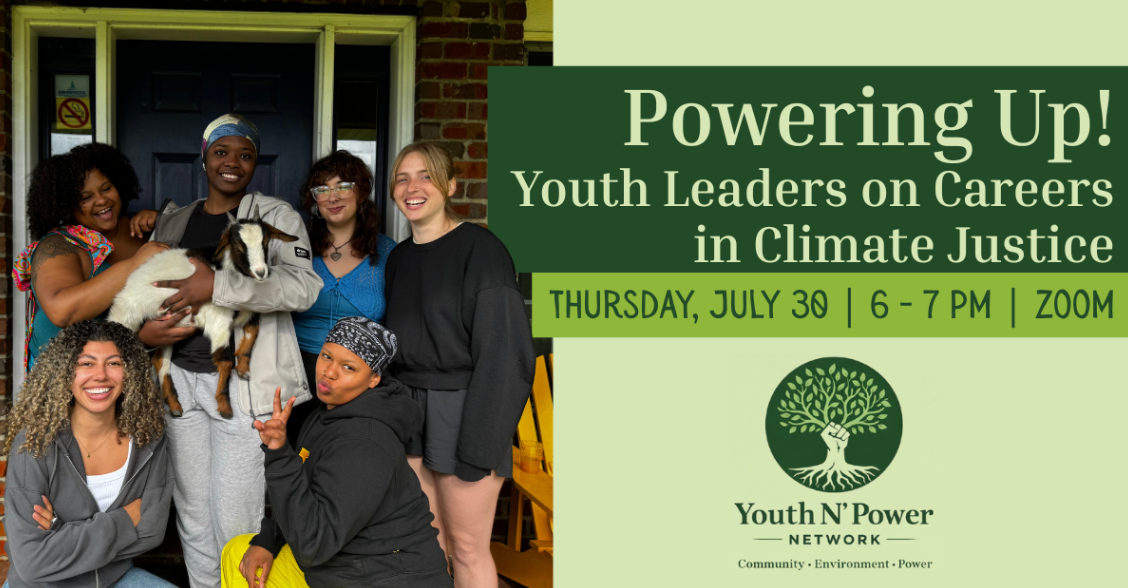
Thursday, July 30, 6:00 - 7:00 p.m.; Zoom Young people across the state are interested in pursuing careers in climate justice. Many of them have already become leaders in the field! Join Youth N'Power for a conversation and presentation about young leaders and their experiences in climate justice careers. You’ll hear firsthand about their experiences navigating school, careers, advocacy, and the transition into becoming professionals. Whether you’re interested in climate justice, community organizing, conservation, or exploring career opportunities, this conversation will offer honest insights, perspective, advice, and encouragement from young people. 
By Bob Hulteen July 14, 2026
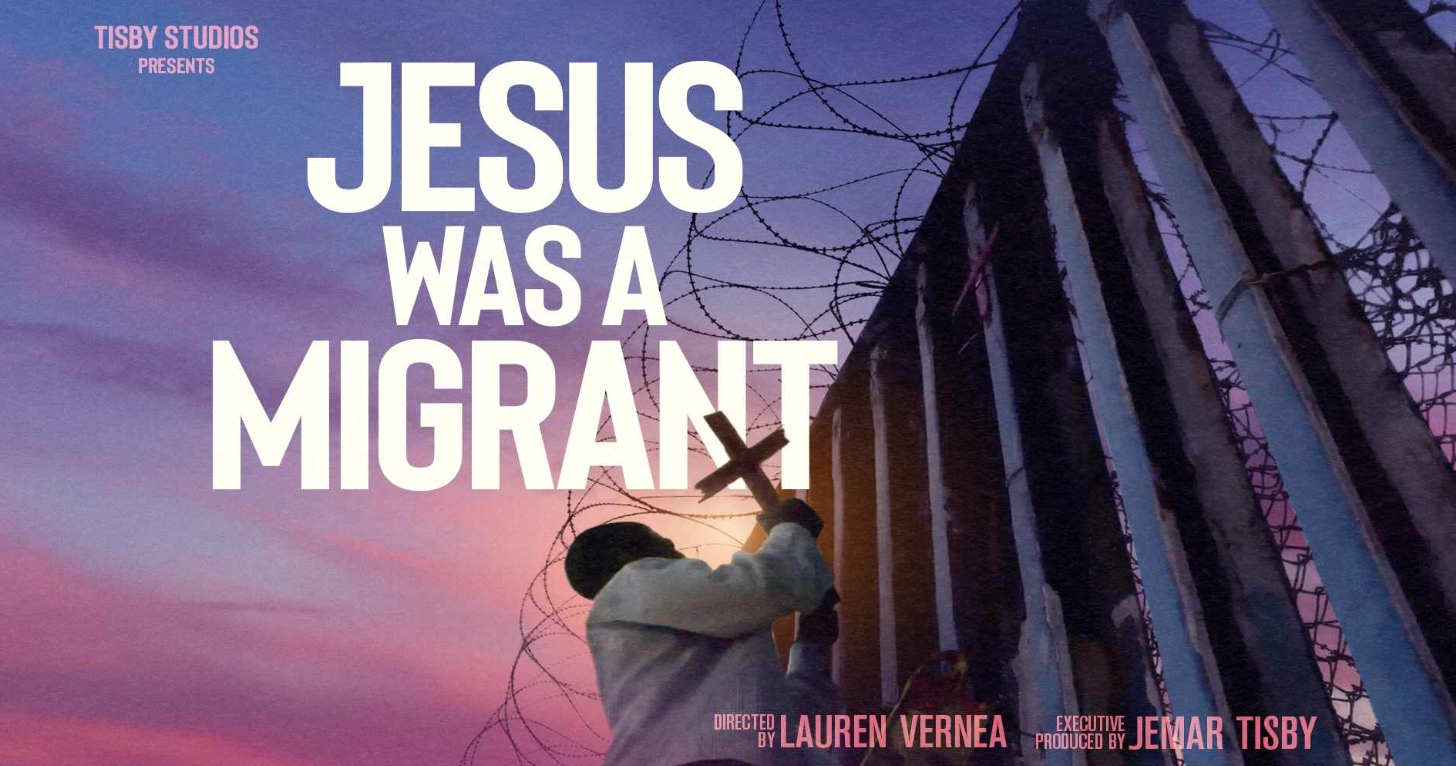
Thursday, August 13, 6:30 p.m, doors open, and 7;00 p.m., screening begins; House of Hope Presbyterian Church, 797 Summit Avenue, St. Paul Join the Minnesota Council of Churches and Minnesota Multifaith Network for a free screening of the documentary “Jesus Was a Migrant,” followed by a guided conversation on Thursday, August 13! This thought-provoking film explores the intersection of faith, migration, and the lived experiences of immigrants and refugees — providing an apt mirror as we reflect on the circumstances we find ourselves in today. Following the screening, guests are invited to participate in a facilitated conversation to discuss the film's themes and consider how faith calls its practitioners to regard their neighbors with compassion, dignity, and understanding. This event is free to attend, but seating is limited. Please register by August 6 to reserve your seat. 
By Bob Hulteen July 14, 2026
The body content of your post goes here. To edit this text, click on it and delete this default text and start typing your own or paste your own from a different source.
By Bob Hulteen July 14, 2026
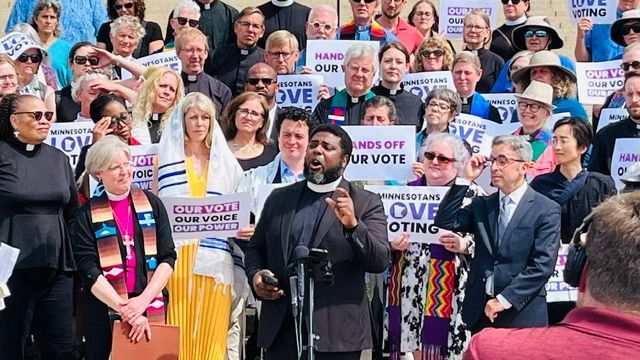
By Rev. Tom Duke On a steamy, sunlit morning at the Minnesota State Capitol, I stood—proud and admittedly sweaty—among about sixty-five clergy from many religious traditions. We gathered in our varied symbolic garb to affirm a shared commitment: advocating for voting processes that are free, fair, secure, and accessible to all eligible voters in the upcoming elections. Why is this the business of clergy? Because protecting the right to vote protects human dignity—a core value upheld across virtually all religious traditions. That dignity, and the voting rights that honor it, form the foundation of just, peaceful, and healthy communities. Most faith traditions aspire to such communities, and they recognize that democracy depends on safeguarding the voice of every citizen. This commitment is not about partisan politics or specific policy agendas. It is about human thriving and well‑being. Religious leaders understand how institutions can be distorted, even corrupted, by greed and the pursuit of power, and how accountability to voters is a necessary check on those tendencies. The opportunity to choose leaders—or reject them—is as close to sacred as a secular process can be. What made this press conference especially powerful was that clergy from multiple religious traditions spoke publicly with one voice. That unity is possible only because of years of intentional relationship‑building across differences—work that cultivates trust, mutual respect, and shared purpose. Through that process, leaders discover shared values, principles, and aspirations, even as they acknowledge real differences. Although differences often draw the most attention, far more is held in common across traditions than most people realize. When we do not know what we have in common, our differences will divide us; when we do know what we share, those differences can enrich us. Respectful and appreciative relationship‑building across differences is not optional; it is essential to our collective future. As theologian Hans Kung observed, “without peace among religions there will not be peace in the world.” Each of us can stretch toward greater curiosity, reaching out to neighbors of different cultures and traditions to learn what we share and where we differ. We can also support organizations that cultivate interreligious cooperation in service and justice work. I’m grateful to ISAIAH and Faith in US for convening this press conference and to the Minnesota Multifaith Network (MnMN) for its years of relationship‑building. You can read a news story about the press conference and explore the national clergy sign‑on letter, " Faith Leaders Defending Democracy ," which has already been signed by nearly 2,000 clergy across many states. 
By Bob Hulteen July 3, 2026
Thursday, July 9, 11:00 a.m. - Noon; Virtua l Peace and Justice Studies Association (PJSA), as part of its Leading Social Change Scholar Series, will offer a free webinar lead by Dr. Hudda Ibrahim under the title "From Somalia to ICE: Working for Peace and Justice for Somalis in Central Minnesota." Dr. Ibrahim is a St. Cloud City Council member, who leads OneCommunity Alliance, a nonprofit that expands homeownership for new Americans in Central Minnesota. She previously taught liberal arts and humanities at St. Cloud Technical and Community College for more than ten years. She later transitioned into consulting, where she trained employers in workplace leadership, cultural competency, and employee retention. Dr. Hudda holds a doctorate in leadership from Saint Mary's University of Minnesota. She also earned a master's degree in conflict resolution from the University of Notre Dame, Indiana, and a bachelor's degree in conflict resolution from Saint Benedict and Saint John's University. 
By Bob Hulteen July 3, 2026
Wednesday, July 8, 8:30 - 10:00 a.m.; The Heights, 1400 North Winthrop Street, St. Paul Celebrate the launch of an inspirational new program: Pope Leo Village! Inspired by Pope Leo XIV’s commitment to social justice, compassion, and service, this national interfaith movement unites people of all backgrounds to build homes, community, and hope. Locally, Pope Leo Village will help build five homes at The Heights on St. Paul’s Greater East Side. Volunteer opportunities extend to other build sites around the metro and Habitat For Humanity's ReStore locations. The event includes refreshments, speaking program featuring Archbishop Bernard Hebda, and a ceremonial wall-raising. Please RSVP by Friday, July 3. 
By Bob Hulteen July 2, 2026
Minnesota has long been a place of refuge. Generations of immigrants, refugees, and people fleeing war, persecution, and violence have found not only safety here but the opportunity to build new lives. They are our neighbors, coworkers, classmates, business owners, and faith leaders. They have helped shape the rich religious diversity that strengthens our state. Today, however, many of these communities are living with profound uncertainty. Changes to Temporary Protected Status (TPS) and new restrictions on access to asylum have left families wondering whether the homes, livelihoods, and communities they have built can endure. This week the Supreme Court issued two significant immigration rulings that narrow humanitarian protections. Mullin v. Al Otro Lado , the Court upheld the federal government's policy of turning away people seeking asylum at U.S. ports of entry. Mullin v. Doe , the Court ruled that the Trump administration may end Temporary Protected Status (TPS) for thousands of immigrants from Haiti and Syria many who face life-threatening consequences if forced to return to their country of origin. This moment is especially troubling because it challenges a commitment the world made in the aftermath of World War II: that people fleeing persecution should have the opportunity to seek protection. The Universal Declaration of Human Rights affirms in Article 14 that "everyone has the right to seek and to enjoy in other countries asylum from persecution." Across our religious traditions, this principle resonates with a shared moral conviction that those escaping violence, oppression, or religious persecution deserve compassion rather than exclusion. As access to asylum narrows and humanitarian protections are reduced, many of the world's most vulnerable people—including those persecuted because of their faith—face even greater insecurity. For the Minnesota Multifaith Network, this is not simply a debate about immigration policy. It is a test of the kind of society we seek to build. Our diverse religious, spiritual, and philosophical traditions teach that every human life possesses inherent dignity and that we are called to care for the stranger and stand alongside those who live in fear. At a time when anxiety and division are reshaping our public life, we believe our deepest values invite us to resist fear with relationship, indifference with solidarity, and exclusion with hospitality. In doing so, we strengthen not only immigrant communities but the moral fabric of Minnesota itself. Minnesotans are not powerless in the face of these challenges. Each of us can help preserve our state's tradition of welcome by building relationships across cultures and faiths, supporting organizations that accompany refugees and asylum seekers, advocating for policies that uphold human dignity, and speaking out when fear and misinformation threaten our neighbors. Faith communities, civic organizations, and individuals all have a role to play in creating places where newcomers are seen, heard, and valued. By choosing compassion over indifference and courage over fear, we affirm that every person is worthy of dignity, safety, and belonging. In doing so, we not only stand with migrants and those seeking asylum—we strengthen the bonds of trust, justice, and pluralism that make Minnesota a place where all can flourish. The most important document that makes clear the rights of refugees and asylum seekers is found in the United Nations The 1951 Refugee Convention and 1967 Protocol. The Shoulder to Shoulder Campaign has shared the following list of resources and statements below for you and your networks, in case they may be helpful in light of these decisions.  FWD.us - statement and resources RNS Article: As Supreme Court clears way to deport Haitians and Syrians, faith leaders grieve, prepare for what’s next (indexed in Atlas of American Belonging) What is happening with Temporary Protected Status (TPS) in the United States" — FAQs from International Refugee Assistance Project Shoulder to Shoulder Campaign post Church World Service (CWS) - roundup of resources and ways to take action Bend the Arc: Jewish Action Muslim Civi Coalition Interfaith Immigration Coalition Muslim Advocates Muslims for Just Futures We Are All America Religious Action Center of Reform Judaism Jewish Council for Public Affairs National Council of Jewish Women National Network for Arab American Communities American Friends Service Committee Jesuit Refugee Service/USA Communities United for Status and Protection CAIR Center for Constitutional Rights Human Rights First CASA National Immigration Project The Leadership Conference on Civil and Human Rights National Immigration Law Center National TPS Alliance Haitian Bridge Alliance
By Bob Hulteen June 26, 2026
Saturday, June 27, 5;00 - 7:00 p.m.; Brian Coyle Community Center, 420 15th Avenue3 South The new band Ardaa will perform on Saturday, June 27, at the Somali Independence Day Cultural Festival taking place in Cedar-Riverside from 5:00 p.m. to 7:00 p.m. Ardaa are the headliners and will go on at a little after 6:00 p.m. Ardaa's mission is to rescue songs that were popular in Somalia before the Civil War in the early 1990s. The music is still remembered by many Somalis here in the Twin Cities, who are thrilled that Ardaa is ready to transmit these songs to younger Somalis who miss not just the music, but also the creative ferment that was a big part of life in Somalia before the War. The band consists of Ahmed Yusuf (vocals), Muhumed Ali Magan (oud), Mick Labriola (percussion) and Dawn Doering (ney, not pictured). Pictured but not performing on Saturday is Misbil Hagi-Salaad (vocals). The Cultural Fluency Initiative is supporting this effort. 
By Bob Hulteen June 24, 2026
Saturday, June 27, 9:30 a.m. - 4:00 p.m.; Parish Hall, Unity Church, 733 Portland Avenue, St. Paul, and on Zoom The Unity Church Unitarian Indigenous Justice Team would like to extend an invitation to an interactive event featuring Mark Charles on Saturday, June 27, 9:30 a.m. - 4:00 p.m. Mark Charles’s weekend visit to Minnesota is being co-hosted by the Minnesota Repair Communities for Makoce Ikikcupi and a working group of Community Outreach Teams at Unity Church. The Central Minnesota Repair Community, hosted by New Journey UCC and River of Hope ECLA, is offering a full day of events with Mark Charles in Hutchinson on Sunday, June 28. Mark R. Charles is a Native American activist, public speaker, author, and former independent U.S. presidential candidate known for confronting systemic racism and the legacy of the Doctrine of Discovery. A dual citizen of the U.S. and Navajo Nation, he has served as a journalist, pastor, and consultant, advocating for truth-telling, and reconciliation. Charles co-authored Unsettling Truths: The Ongoing Dehumanizing Legacy of the Doctrine of Discovery with Soong-Chan Rah. 
By Bob Hulteen June 24, 2026
Friday, June 26, 1:00 - 2:30 p.m .; Minnesota State Capitol, 75 Rev. Dr. Martin Luther King Blvd, St Paul Join Mukwa and other Indigenous organizations and leaders on June 26 for a rally in front of the Minnesota Capitol, where they will be presenting the "Mother Earth vs. Big Tech Petition." This petition advocates for a two-year moratorium on the construction of hyperscale data centers. The group's goal is to deliver this important message directly to the office of the Governor of Minnesota. RSVP is encouraged. 
Show More