MultiReligious Leaders' Press Conference to Protect Democracy
By Rev. Tom Duke
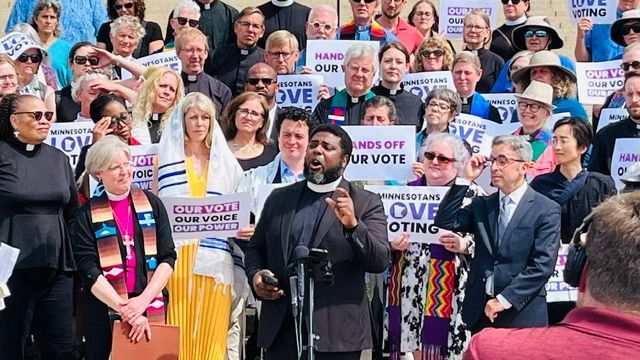
On a steamy, sunlit morning at the Minnesota State Capitol, I stood—proud and admittedly sweaty—among about sixty-five clergy from many religious traditions. We gathered in our varied symbolic garb to affirm a shared commitment: advocating for voting processes that are free, fair, secure, and accessible to all eligible voters in the upcoming elections.
Why is this the business of clergy? Because protecting the right to vote protects human dignity—a core value upheld across virtually all religious traditions. That dignity, and the voting rights that honor it, form the foundation of just, peaceful, and healthy communities. Most faith traditions aspire to such communities, and they recognize that democracy depends on safeguarding the voice of every citizen.
This commitment is not about partisan politics or specific policy agendas. It is about human thriving and well‑being. Religious leaders understand how institutions can be distorted, even corrupted, by greed and the pursuit of power, and how accountability to voters is a necessary check on those tendencies. The opportunity to choose leaders—or reject them—is as close to sacred as a secular process can be.
What made this press conference especially powerful was that clergy from multiple religious traditions spoke publicly with one voice. That unity is possible only because of years of intentional relationship‑building across differences—work that cultivates trust, mutual respect, and shared purpose. Through that process, leaders discover shared values, principles, and aspirations, even as they acknowledge real differences. Although differences often draw the most attention, far more is held in common across traditions than most people realize. When we do not know what we have in common, our differences will divide us; when we do know what we share, those differences can enrich us.
Respectful and appreciative relationship‑building across differences is not optional; it is essential to our collective future. As theologian Hans Kung observed, “without peace among religions there will not be peace in the world.” Each of us can stretch toward greater curiosity, reaching out to neighbors of different cultures and traditions to learn what we share and where we differ.
We can also support organizations that cultivate interreligious cooperation in service and justice work. I’m grateful to ISAIAH and Faith in US for convening this press conference and to the Minnesota Multifaith Network (MnMN) for its years of relationship‑building. You can read a news story about the press conference and explore the national clergy sign‑on letter, "Faith Leaders Defending Democracy," which has already been signed by nearly 2,000 clergy across many states.